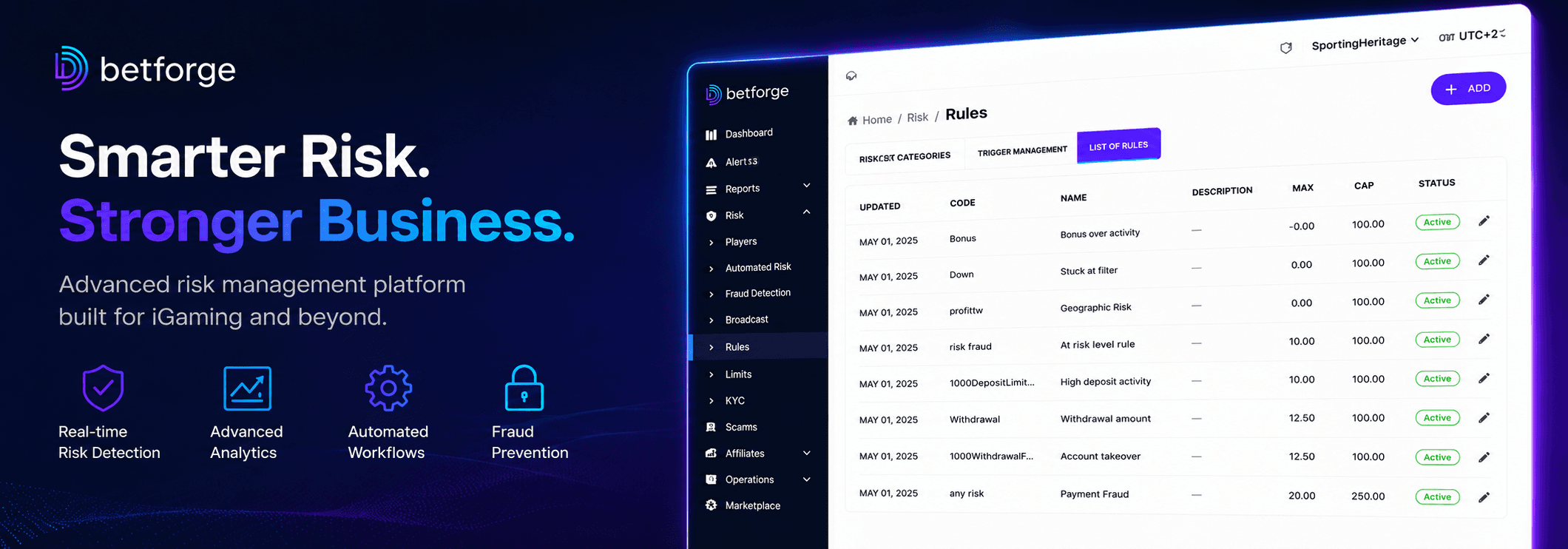
Modern Risk Management in iGaming: How Casino and Sportsbook Platforms Detect Fraud Before It Becomes a Problem
Risk management in iGaming has changed dramatically over the past few years.
A while ago, most casino platforms relied on very basic anti fraud rules. Block VPN users. Flag duplicate cards. Limit suspicious withdrawals. For smaller projects, this was often enough. Today that approach no longer works. Modern fraud schemes are far more sophisticated. Operators deal with multi accounting, bonus abuse, sportsbook exploits, payment fraud, affiliate manipulation, and increasingly automated behavior patterns. And the most dangerous part is that many companies do not immediately notice these losses. Money disappears slowly through fake traffic, abuse of promotions, suspicious betting activity, and payment manipulation. Individually, these cases may seem small. At scale, they directly affect profitability.
This is why risk management is no longer just an additional feature inside a platform. Today it is part of the core infrastructure of every serious casino and sportsbook operation.
At BetForge, we built our risk management system directly into the platform itself instead of treating it like an external tool added later. Our system works through trigger based logic. Every trigger checks a specific player action or behavioral pattern and contributes to the overall risk score in real time. This approach gives operators much more flexibility and much more accurate monitoring. Instead of relying on one large anti-fraud rule, the platform analyzes dozens of smaller signals together.
For example:
- unusual deposit behavior
- repeated payment methods
- device fingerprint matches
- suspicious sportsbook betting activity
- rapid bonus claiming
- impossible geolocation changes
- abnormal gaming sessions
One signal alone may not mean fraud. But when several triggers activate together, the platform can quickly identify risky behavior and react immediately. This becomes especially important for modern B2B casino and sportsbook platforms where thousands of transactions and betting actions happen every minute.
A few years ago, many fraud cases could still be reviewed manually. Today that becomes almost impossible once operators start scaling across multiple GEOs, payment systems, and traffic sources.
Why Traditional Anti Fraud Systems No Longer Work
One of the biggest mistakes many platforms still make is relying on static rule systems. Usually these systems work like this: “If player does X and Y, block the account.” The problem is that real player behavior is much more dynamic.
For example:
- using a VPN does not automatically mean fraud
- a large deposit is not always suspicious
- multiple accounts may sometimes belong to one household
This is why BetForge uses a trigger based architecture instead of rigid rule combinations. Each trigger adds a certain risk score.
For example:
- VPN usage
- reused payment method
- suspicious betting speed
- rapid withdrawals
- duplicate device fingerprint
The platform combines these signals together and builds a much more realistic risk profile. This helps reduce false positives while improving fraud detection accuracy. For operators, this matters a lot. Blocking legitimate players creates just as many problems as missing fraudulent ones.
How Trigger Based Risk Management Works
The main advantage of trigger based systems is flexibility.
Instead of creating one massive anti-fraud rule, the platform evaluates many smaller conditions independently.
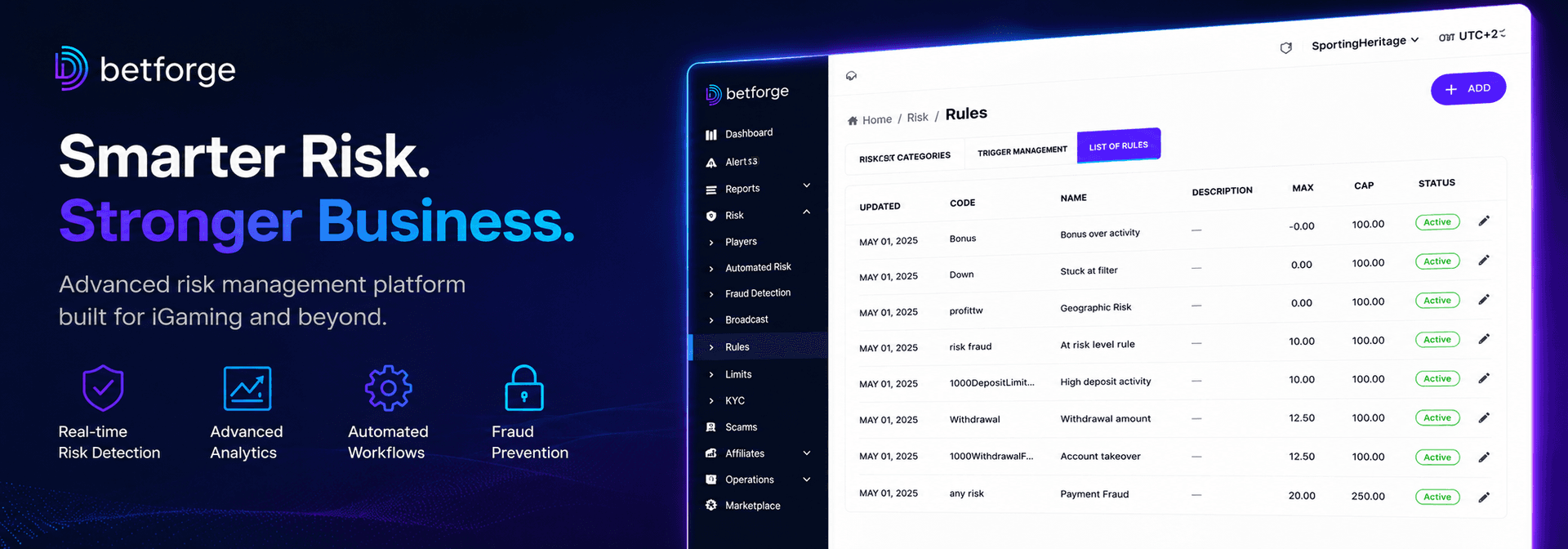
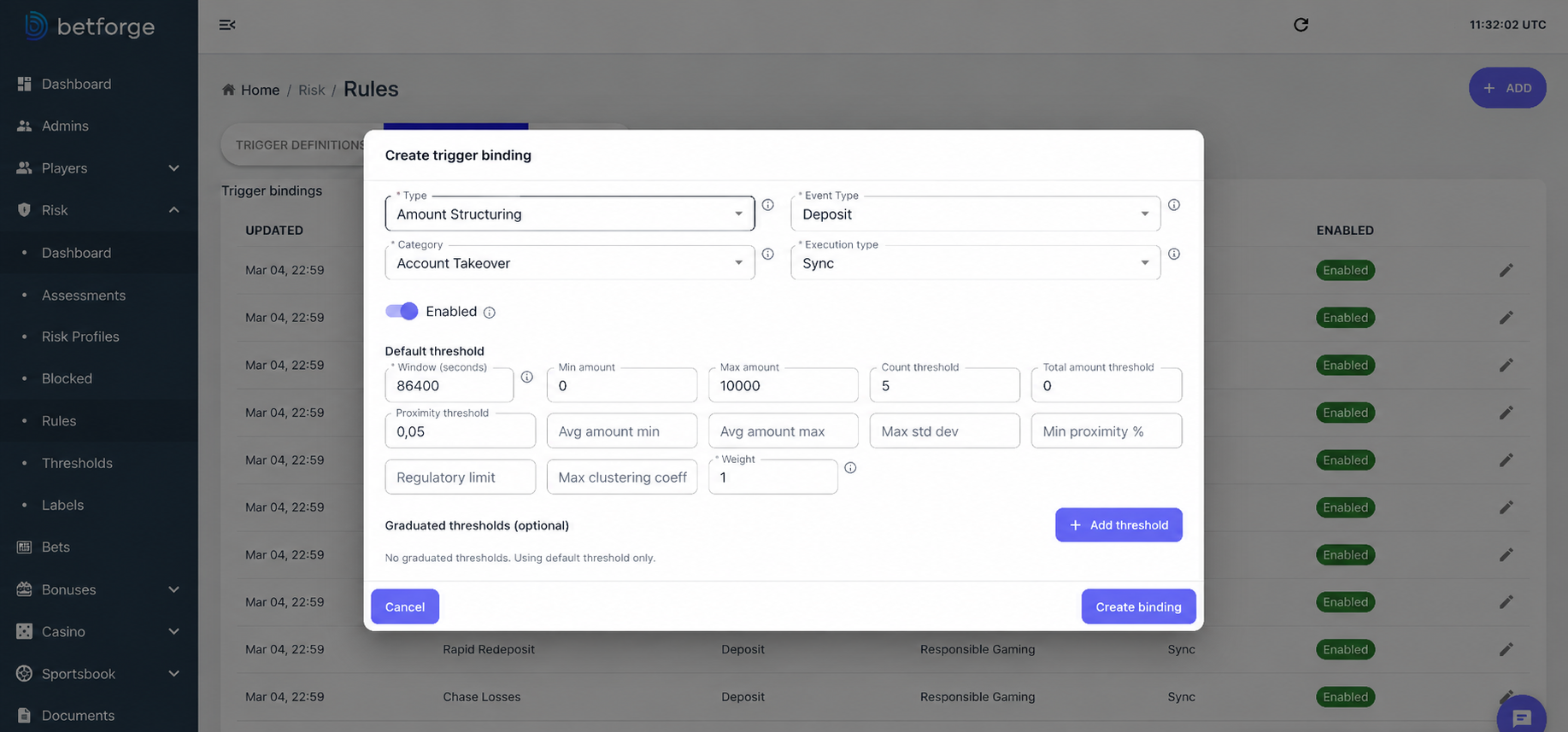 BetForge back-office: Managing independent risk trigger categories in real time.
This makes the system:
- easier to scale
- easier to manage
- easier to customize for different markets
- more accurate over time
For example, one trigger may detect unusual betting speed, while another monitors wallet reuse between accounts. Separately, these events may not look dangerous. Together, they can reveal coordinated fraud behavior. This approach also allows risk teams to adapt much faster when fraud patterns change. And in iGaming, fraud patterns change constantly.
Multi Accounting Is Still One of the Biggest Hidden Problems
Many operators underestimate how much money is lost because of multi accounting. In practice, companies often realize the scale of the issue only after bonus costs, affiliate fraud, or suspicious withdrawals start growing rapidly.
Modern fraud groups no longer create obvious duplicate accounts. They spread activity across different:
- devices
- wallets
- IP ranges
- browsers
- payment methods
This is why modern risk systems need to analyze relationships between accounts instead of checking only one parameter.
At BetForge, the platform can detect:
- shared device fingerprints
- repeated phone numbers
- matching payment wallets
- suspicious registration patterns
- linked behavioral activity
The goal is not simply banning accounts. The goal is identifying entire fraud clusters before operators lose money through bonus abuse, payment fraud, or affiliate manipulation. And this becomes even more important for large sportsbook and casino operations where manual checks no longer scale.
Detecting Bonus Abuse at Scale
Bonus abuse has become much more sophisticated. Fraudsters no longer create one extra account just to claim a welcome offer. Many operate in coordinated groups, automate wagering activity, and intentionally stay below obvious fraud thresholds. A trigger based system helps detect patterns that are almost impossible to identify manually.
Some examples include:
- fast bonus activation immediately after registration
- low variance betting used to clear wagering requirements with minimal risk
- multiple accounts connected to the same wallet or device
- unusual spikes in bonus claims from related user profiles
These triggers help operators protect bonus budgets without making the experience worse for legitimate players.
Sportsbook Risks Require a Different Approach
Sportsbook fraud is very different from casino fraud.
The biggest risks here include:
- value betting
- live betting exploitation
- organized betting syndicates
- latency abuse
A casino focused anti fraud system will often miss these patterns completely. That is why BetForge includes triggers specifically designed for sportsbook behavior.
For example:
- unusually high stakes on small markets
- betting patterns linked to latency exploitation
- rapid stake escalation within short periods
- behavior associated with value betting strategies
These signals work alongside casino related triggers and give operators one unified risk view across the platform. In high traffic sportsbook environments, manual reviews quickly become impossible. Thousands of betting events, deposits, withdrawals, and player actions happen every minute. Without automated trigger systems, risk teams become overloaded very fast.
Responsible Gaming Is Also Part of Risk Management
Today risk management is not only about protecting operator revenue. Regulators increasingly expect platforms to identify problematic gambling behavior in real time. The same trigger logic used for fraud prevention can also help detect early signs of gambling harm.
For example:
- sudden deposit increases
- unusually long gaming sessions
- repeated re deposits after losses
- loss chasing behavior
By embedding responsible gaming triggers directly into the platform, operators can stay compliant while also improving player protection. This turns responsible gaming from a simple compliance requirement into a practical operational tool.
Why Platform Native Risk Management Matters
Many operators try solving these problems by connecting multiple third party anti-fraud tools. At first this may look like a quick solution. In reality, it often creates even more operational complexity. Different systems use different scoring models. The same player may be flagged several times. Support teams spend more time on manual reviews. Costs increase while efficiency drops. We have seen operators connect several anti-fraud services simultaneously, only to create additional workload for risk and support departments. When risk management is built directly into the platform, everything works differently.
The system has full context about player activity across:
- payments
- betting behavior
- account activity
- game sessions
- wallet operations
This allows the platform to react faster and make much more accurate decisions. We also increasingly see fraud patterns spread across connected groups of accounts instead of isolated users. That is why modern risk systems need to analyze relationships between accounts, devices, wallets, and betting behavior instead of checking only one signal at a time.
For B2B casino and sportsbook operators, this is not a small improvement. It changes how the entire operation works.
Why This Matters for Operators
Without a strong risk management system, operators slowly lose money through dozens of small issues that become difficult to track over time.
Most problems usually start with:
- bonus abuse
- payment fraud
- sportsbook exploitation
- fake affiliate traffic
- multi accounting
- Individually, these cases may not look serious.
But together they directly affect:
- profitability
- operational workload
- support teams
- compliance processes
- licensing risks
Modern platforms need to detect suspicious behavior early and react automatically. That is exactly why risk management is becoming part of the platform infrastructure itself instead of just another external anti-fraud tool.
Risk Management in Modern iGaming Platforms
| Traditional Systems | Modern Trigger Based Systems |
|---|---|
| Static rules | Dynamic behavioral analysis |
| Manual reviews | Automated scoring |
| One signal checks | Multi signal analysis |
| Limited scalability | Built for high traffic environments |
| Separate anti fraud tools | Platform native infrastructure |
| Reactive detection | Real time monitoring |
Final Thoughts
Risk management is no longer a support function operating somewhere in the background. It is now a core part of running a scalable, profitable, and sustainable iGaming business.
At BetForge, we believe operators need one system that combines:
- fraud prevention
- bonus abuse detection
- sportsbook integrity monitoring
- payment risk analysis
- responsible gaming tools
Because when risks are identified early and handled automatically, operators can focus on growth instead of constant damage control. If you want to learn more about how BetForge builds risk management into every layer of its casino and sportsbook platform, explore our other articles about turnkey infrastructure, platform ownership, and scalable B2B iGaming solutions.
About the Author
Michael Agievich is CBDO at BetForge.io, where he works closely with operators on business development, partnerships, platform launches, and growth strategy.
He focuses on helping casino and sportsbook brands build scalable B2B infrastructure and navigate operational challenges in the modern iGaming market.